



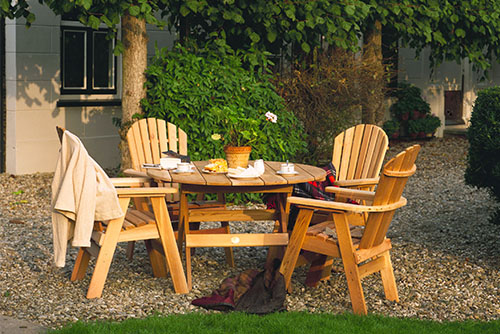
Adirondack-style chairs are more popular than ever. They are known for their relaxed seating, wide armrests and timeless look. Those who orient themselves to such a chair quickly come across several variants, such as the Bear Chair and chairs very similar to it, for example, the Comfy Chair. At first glance, the differences between these chairs may seem small, but those who take a closer look – and especially: sit more closely – will notice that the details have a great effect on comfort, durability, quality and ease of use.
In this blog, we list the key differences between our original Bear Chair and other chairs, clearly explaining what those details mean in practice.
Wood type and material thickness of the Bear Chair.
The Bear Chair is made of Western Red Cedar, a type of wood that is naturally resistant to moisture, mold and temperature fluctuations. This allows the chair to remain outdoors for years without treatment. Cedar wood must be dried properly when just cut. Giving the wood enough drying time and treating it properly will preserve its quality and keep it from warping later. This is called Clear Cedar. Bear Chair provides the proper drying time, keeping the quality of our wood chairs at their best.
Similar chairs often use a different type of wood or a thinner version of cedar. Thinner wood is more susceptible to warping and cracking. Especially with intensive use or prolonged exposure to wind and weather, this can cause a chair to lose its sturdiness more quickly and thus reduce its lifespan.
The Bear Chair’s 20mm thick slats provide extra stability and a solid feel while sitting. This is especially noticeable when the chair is always outside; it stays beautiful, year after year.
Finishes and edges
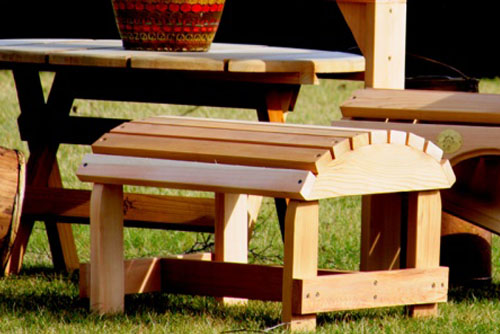
In the case of the Bear Chair, the parts are finished with softly rounded edges. This not only looks beautiful, but it also feels more comfortable. The chair has no sharp corners, making standing up, or leaning on the chair with your bare arms easy and comfortable.
In many similar chairs, the parts are straighter and more angularly finished. This is functional, but can feel less comfortable and often looks a bit more technical or sleek, where the Bear Chair instead maintains a quiet, natural look.
Screws and construction
An important, but not so easily visible difference, is in the fastening. The Bear Chair uses thicker and longer screws, which ensures a sturdy construction. This is especially relevant for chairs that are left outside all year and have to deal with wood movement. We use flexible wood glue for this, which moves with the wood. This is important, as the wood in the Bear Chair continues to “move” over the years and forms to the body.
Similar chairs sometimes use thinner or shorter screws, which can eventually lead to poor connections, causing the chair to lose quality faster. Also, other chairs often use harder curing glue. This may provide sufficient strength initially, but leaves less room for natural movement of the wood, which can eventually cause tension and cracks in the structure.
Design and balance of the Bear Chair.
Finally, the difference is in the design itself. The Bear Chair is an original design with proportions tailored for long-term comfort. Similar chairs have minor adjustments in height, inclination or width. That certainly makes them usable, but often just a little less balanced for long-term relaxed sitting.
An honest conclusion
There are many chairs that closely resemble the Bear Chair, but differ in material selection, finish and construction. Those differences may be subtle, but have obvious consequences for comfort, stability and longevity. Those who look primarily at quality, long-term and intensive use will find that it is precisely those details that make the real difference.